Lower San Pedro River Valley’s Watershed Alliance’s second ‘Our Water, Our Valley’ presentation

The San Pedro River flows through Mammoth, Arizona in Pinal County closing roads that are open when it is dry. Photo by T.C. Brown
“Our Valley, Our Water: Once It’s Gone, It’s Gone” included a presentation about San Pedro Valley hydrology by regional hydrologist Laurel Lacher. In a stated straightforward presentation style designed for community audiences, Lacher discussed the state-of-the-art MIKE SHE hydrological model she helped develop for the lower San Pedro Valley. With compelling, high-tech visuals, she illustrated what the model says about current and potential future impacts from local large-scale water withdrawals. Lacher possesses a PhD in Hydrology and runs a consulting group.
“MIKE SHE is an integrated hydrological modelling system for building and simulating surface water flow and groundwater flow. MIKE SHE can simulate the entire land phase of the hydrologic cycle and allows components to be used independently and customized to local needs. MIKE SHE emerged from Système Hydrologique Européen (SHE) as developed and extensively applied from 1977 onwards by a consortium of three European organizations: the Institute of Hydrology (the United Kingdom), SOGREAH (France) and DHI (Denmark). Since then, DHI has continuously invested resources into research and development of MIKE SHE. MIKE SHE can be used for the analysis, planning and management of a wide range of water resources and environmental problems related to surface water and groundwater, especially surface-water impact from groundwater withdrawal, conjunctive use of groundwater and surface water, wetland management and restoration, river basin management and planning, impact studies for changes in land use and climate.”

The San Pedro River is dry much of the year as seen here near Mammoth, Arizona. Photo by T.C. Brown
A 2014 Article Abstract by Lacher, and others, includes related information and indicates her long-term interest in the area.
“The San Pedro River originates in Sonora, Mexico, and flows north through Arizona, USA, to its confluence with the Gila River. The 92-km Upper San Pedro River is characterized by interrupted perennial flow, and serves as a vital wildlife corridor through this semiarid to arid region. Over the past century, groundwater pumping in this bi-national basin has depleted baseflows in the river. In 2007, the United States Geological Survey published the most recent groundwater model of the basin. This model served as the basis for predictive simulations, including maps of stream flow capture due to pumping and of stream flow restoration due to managed aquifer recharge. Simulation results show that ramping up near-stream recharge, as needed, to compensate for downward pumping-related stress on the water table, could sustain baseflows in the Upper San Pedro River at or above 2003 levels until the year 2100 with less than 4.7 million cubic meters per year (MCM/yr). Wet-dry mapping of the river over a period of 15 years developed a body of empirical evidence which, when combined with the simulation tools, provided powerful technical support to decision makers struggling to manage aquifer recharge to support baseflows in the river while also accommodating the economic needs of the basin.” https://www.researchgate.net/publication/268445752_Application_of_Hydrologic_Tools_and_Monitoring_to_Support_Managed_Aquifer_Recharge_Decision_Making_in_the_Upper_San_Pedro_River_Arizona_USA

Dr. Laurel J. Lacher discusses hydrology and water resources of the Lower San Pedro River Subbasin. Photo by T.C. Brown
Lacher discussed hydrology and water resources of the Lower San Pedro River Subbasin. She explained the geographic and hydrologic settings of the regions sub-watersheds. She discussed the weather trends as they pertained to the long-term viability of the area’s watersheds. Also discussed were the various land uses in the region along with their water use over time. A lot of information was covered in a short time in this useful presentation.
Also presenting was water-planning specialist Garland Speight of Partners for Dryland Planning, who shared water-use insights and statistics about the myriad industrial threats plaguing southern Arizona and, specifically, the Tri-Community. Speight holds multiple degrees including an MS, Water, Society & Policy, 2023, University of Arizona. Tucson, AZ and a BS, Mechanical Engineering, 2011 University of Arizona, Tucson, AZ.
Garland Speight’s presentation discussed understanding industrial water use in the Lower San Pedro. Topics included Sacrifice Zones, Surface Hydrology of Linear Infrastructure, and Potential Industrial Water Demand. The focus of industries was mining, power production and data centers. Historic use levels were used as an estimate of what future hydrology trends might involve based on models.

Over 60 people attended the watershed presentation in Mammoth, Arizona on August 25, 2026. Photo by T.C. Brown
This community meeting featured a Q/A session that included invited guests with water-policy and campaign-strategizing expertise, who were able to address the critical question our communities face: “What can we do to protect our water resources?” Sometimes those questions turned more into presentations and statements from those in attendance.
It was noted by both presenters, and others in attendance, that the scientific information available is limited. Whether through lack of transparency or financial incentives, industries may not report water usage or private well levels. Government agencies may not have the financial or technical abilities to conduct thorough research. Grants for such projects are definitely limited. Some in attendance suggested that legal proceedings may be the only way to access accurate information. The ability to use the same statistics to gather various conflicting “facts” can add confusion and muddy-the-waters to reach a consensus.

The San Pedro River drying out after a monsoon storm and flow from the south. Photo by T.C. Brown
The communities and residents of the Copper Corridor obviously need usable water. So does agriculture and the many other industries that call the same areas home, even if on a temporary basis. The dated information has lost some of its value for modeling and basing sound decisions on. Technology has improved for water use, and water management has improved. There is still room to grow. It can be disheartening to see government make decisions to drain dams and dump freshwater into the ocean instead of finding other ways to use and distribute this natural resource. It seems that there would be ways to move excess water from flooded areas to areas of drought. Ground water recharge is certainly a tool that could help in the short and long term if used properly and fairly. Many countries use desalination as a source for usable water. The solutions will cost money. Staying at the extremes of the water issue will not solve the issues. The courts are not necessarily going to decide in favor of what any of the groups want. Government agencies and elected officials may not make the choices the groups would prefer either. Laws and regulations from 1872 and 1980 may not seem applicable today, but they are all we have. There needs to be real discussion at all levels if solutions are to be found. No safe water available is not a solution to any of us. The mining of water is already occurring. Time will tell if the right decisions are made to distribute it wisely.
“Beyond providing a home for numerous rare and endangered species, the San Pedro River offers a critical flyway for some four million migratory birds each year. Its unspoiled wilderness is a powerful draw for those who have made their homes here, as well as thousands of annual visitors.”
“The mission of the Lower San Pedro Watershed Alliance is to protect the ecological integrity and associated indigenous cultural heritage of the lower San Pedro region of Arizona, primarily through voluntary and effective actions by local citizens.” More information on the LSPWA can be found on their website at https://www.lowersanpedro.org.
Thank you to the presenters, subject-matter-experts and for the passionate community members who attended this training. Thanks also to Arizona Attorney General Office and Pinal County Supervisor McClure for attending. Special thanks to Mi Pueblito of Mammoth for the tasty appetizers and snacks.

Lower San Pedro Watershed. Conservation Lands and Well Density Map. Courtesy of Partners for Dryland Planning

The San Pedro River flows from Mexico up to the confluence of the Gila River after heavy rains and monsoon storms. Photo by T.C. Brown

Patterns in the drying mud along the San Pedro River. Photo by T.C. Brown
Local photographer enters images in Tombstone art gallery’s 46th annual show

T.C. Brown submitted three images that were selected to be included in the 46th Annual Art & Photography Show in the Town Too Tough To Die. The show runs from Aug. 28 – Sept. 27, 2026. The gallery will be open seven days a week, 10 a.m. – 4 p.m. during the show. They will close at 1 p.m. on Sept. 27. The gallery is located directly across from the OK Corral on Allen Street in Tombstone, Arizona.
A total of 117 images were selected to be displayed according to Gallery Vice President, Paul Northcutt. Gallery Art Director Tarin Cardamone indicated that this year had a large number of quality images and she was glad that there were images submitted from new participants, such as T.C. Various categories and levels are included in the show. Judging is scheduled to take place on Sept. 5, 2026. Gallery hours will be modified that day. There is also a People’s Choice category.
“The Tombstone Art Gallery is a non-profit, 501(c)4 cooperative organization established for the purpose of furthering the arts in the Tombstone vicinity and preserving the western flavor of the Tombstone, Arizona, area.
“The Gallery fulfills agreements with the City of Tombstone to contribute to an on-going effort to maintain and preserve the historical integrity of the City building which the Gallery occupies, and supports charitable and educational activities within the City of Tombstone.
“During the majority of the year, the Gallery only displays art created and crafted by our members who are residents of Cochise County, AZ. However, during its annual Quilt Show in February, or Art Show in September of each year, any artisan is eligible to enter, regardless of their residence address.
“Proceeds from the sale of tickets for our Art and Quilt raffles go toward supporting annual scholarships to qualifying and deserving Seniors at the Tombstone High School, and to:
- The Tombstone Community Food Bank;
- The Tombstone Senior Center; and
- The Tombstone Small Animal Shelter.”
They also have an annual Craft Show that is held in October. The gallery is staffed with volunteers who make the gallery and the shows a success year-after-year. More information on the gallery and shows can be found on their webpage at https://tombstoneartgallery.com/home.
https://copperarea.com/local-photographer-enters-images-in-tombstone-art-gallerys-46th-annual-show/


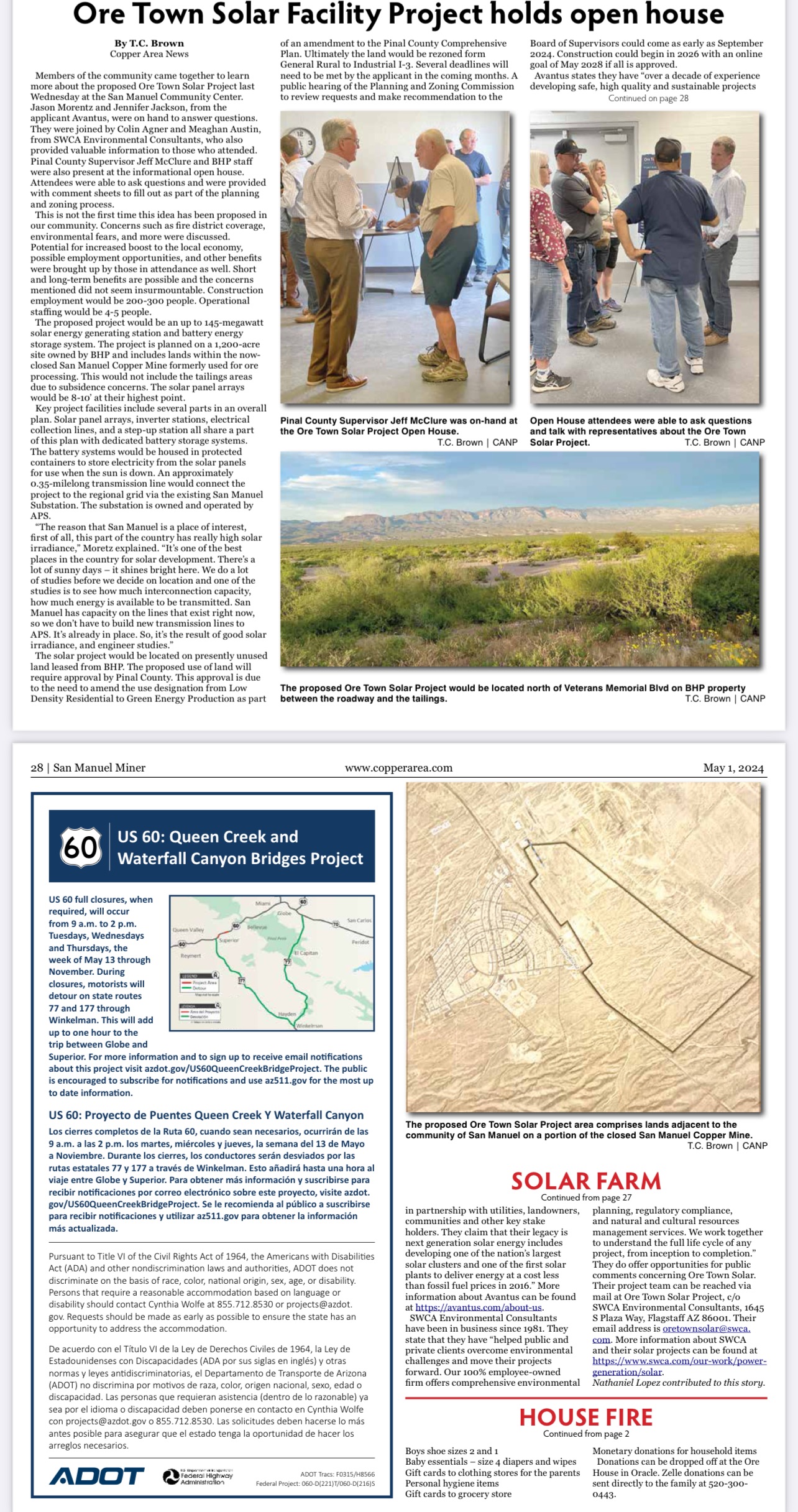
A tear sheet is simply an image that is showing how your photography was used. This could be shown as an ad, any of their marketing materials, social media campaign images, magazine covers, magazine features and a number of other things.
The name “tear sheet” comes from days of film where photographers would find their images in a magazine for example, and tear it out of the magazine. We would take that sheet from the magazine and show that in our physical portfolio.


– Jacques-Henri Lartigue


– Matthew Brady


– Linda McCartney


– Ansel Adams


– Peter Adams
– Eliot Porter


– Elliott
– Galen Rowell


– Joe Buissink


– Percy W. Harris

– Annie Leibovitz


– Alfred Stieglitz


– Ernst Haas


– Eve Arnold


– Destin Sparks


– Susan Meiselas


– David DuChemin


– Ernst Haas


– Ansel Adams


– Diane Arbus


– Leon Levinstein


– Edward Weston


– Rene Burri